

Neura Cognitive Health Supplement: Ingredient Facts, Label Guide, and Consumer Information for 2026
An informational overview examining ingredient-level research context, Supplement Facts interpretation, and evaluation factors consumers consider when researching cognitive health supplement options
New York, NY, Feb. 04, 2026 (GLOBE NEWSWIRE) -- Disclaimer: This article is for informational purposes only. It is not medical advice. Cognitive health concerns should be evaluated by a qualified healthcare professional. This content does not diagnose, treat, cure, or prevent any disease. If you purchase through links in this article, a commission may be earned at no additional cost to you.
This article summarizes publicly available company disclosures and general category context. It does not evaluate effectiveness, outcomes, or individual suitability, and it should not be interpreted as medical advice or a product endorsement.
As consumer interest in cognitive health supplement options continues to grow heading into 2026, updated product disclosures for Neura have recently become publicly available. With more people researching what's out there, detailed product information is now accessible for anyone trying to better understand their supplement options.
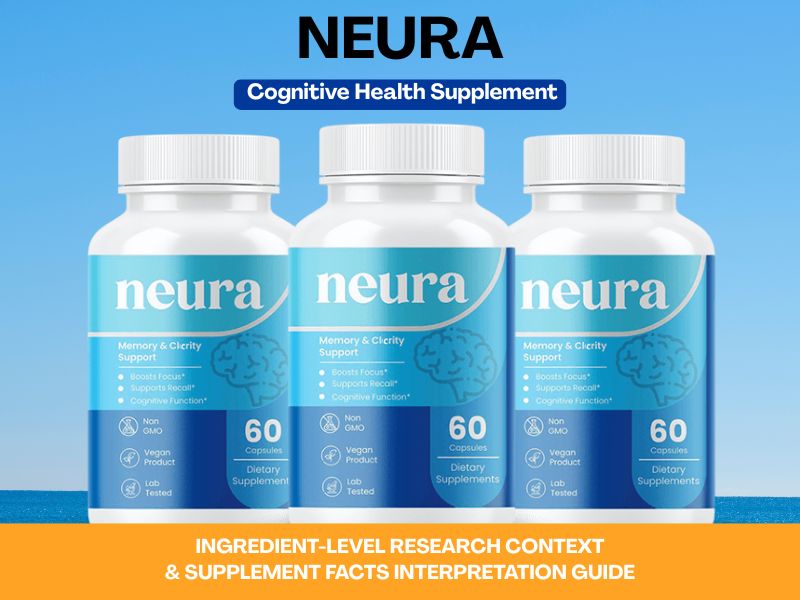
This article provides informational context about the cognitive health supplement category and summarizes what Neura has disclosed about its product. Readers seeking primary-source detail can view the current Neura offer (official Neura page) to review the company's complete product disclosures directly. This article does not assess product effectiveness or outcomes and focuses solely on publicly available disclosures.
Why Consumers Are Researching Cognitive Health Supplement Options
Consumer interest in cognitive health supplement options appears to be rising as more adults research what products are available within this category. Many people express interest in learning about ingredients, formulation transparency, and what factors might be worth considering when evaluating products marketed for cognitive wellness support.
Search activity related to cognitive health supplements often reflects general curiosity about category options rather than specific product recommendations. People researching this category commonly mention concerns about mental clarity, focus during demanding tasks, and general brain wellness as they age. Individuals researching this category often choose to consult qualified healthcare professionals for personalized guidance, particularly when considering any supplement as part of their broader wellness approach.
What Consumers Mean by "Brain Fog" and Why They Research Supplements
If you're researching cognitive health supplements, you've likely encountered the term "brain fog." Consumers use this phrase to describe subjective experiences like difficulty concentrating, slower thinking, or mental fatigue. It's not a medical diagnosis—rather, it's a descriptive term people use when discussing why they're exploring wellness options.
Many people researching cognitive health supplement options report looking for products with ingredient transparency, clear labeling practices, and published research context. Some consumers also consider factors like manufacturing disclosures, refund policies, and customer support accessibility when comparing brands. These are informational considerations, not performance evaluations.
What "Cognitive Health Supplement Options" Typically Refers To
Cognitive health supplement options generally refer to dietary supplement products marketed with positioning related to brain wellness, mental clarity, or cognitive function support. These products are available in various formats—capsules, powders, and liquids—with varying ingredient combinations.
Non-prescription cognitive health supplement products are distinct from prescription medications or professional medical evaluation for cognitive concerns. Consumers researching cognitive health supplement options often compare brands based on ingredient transparency, labeling practices, and published policies. Many people choose to consult qualified healthcare professionals for personalized guidance on whether any supplement fits their individual health circumstances.
Regulatory Context: How Supplements Differ from Prescription Products
It's important for consumers to understand that dietary supplements are regulated differently than prescription drugs. Dietary supplement products—including those marketed with cognitive health positioning—do not require pre-market FDA approval the way it does for pharmaceutical drugs. This distinction provides context for consumers comparing options within this category.
Consumers are often advised to consult qualified healthcare professionals for proper evaluation of any health concern and to discuss supplement use as part of any broader wellness approach.
Category Snapshot: Common Ingredient Families in Cognitive Supplements
When comparing cognitive health supplement options, consumers encounter several recurring ingredient categories. Understanding these families can help readers interpret product labels and marketing materials more effectively.
Mushroom extracts—such as Lion's Mane (Hericium erinaceus)—appear frequently in cognitive wellness formulations. These ingredients are often discussed in the context of traditional use and emerging research on mushroom compounds.
Botanical extracts—including herbs like Bacopa monnieri and Ginkgo biloba—have long histories in traditional wellness practices. Some supplement brands cite ingredient-level research related to these botanicals, though references to individual ingredients are not the same as clinical validation of finished products.
Berry and fruit extracts—such as Goji (Wolf Berry) and blueberry—are sometimes included for their antioxidant content. Antioxidant-related research is a common topic in supplement marketing materials.
Mineral-rich compounds—like Shilajit, a substance formed from decomposed plant matter in mountain regions—are occasionally featured in cognitive formulations. These ingredients are often discussed in the context of traditional use narratives and mineral content.
This overview is educational only and does not evaluate the effectiveness of any ingredient category or specific product formulation.
Ingredient Transparency in the Cognitive Health Supplement Category
Ingredient transparency is a factor many consumers consider when researching supplements. Companies vary in how much detail they provide about formulation, sourcing, and manufacturing processes. Some brands publish complete Supplement Facts panels with individual ingredient amounts, while others use proprietary blends that group ingredients together.
Consumers researching cognitive health supplement options often look for clear disclosure of ingredient names, amounts, and forms (such as extract ratios or standardization percentages). This information helps people compare products and understand what they're considering.
What Neura Discloses About Its Formulation
According to publicly available company disclosures, Neura lists the following primary ingredients in its formulation:
Lion's Mane Extract (Hericium erinaceus) — According to the company's public disclosures, Neura lists Lion's Mane as a primary ingredient. Some supplement brands cite ingredient-level research related to general cognitive wellness; however, references to an ingredient are not the same as clinical evaluation of the finished product, and this overview does not assess outcomes.
Wolf (Goji) Berry Extract — The company discloses Wolf Berry (Goji) as a formulation component. Some supplement brands reference antioxidant-related research context when discussing berry extracts; however, ingredient-level research is not the same as finished-product testing, and this overview does not make performance claims.
Bacopa monnieri Extract — According to the company's disclosures, Neura includes Bacopa monnieri. Some supplement brands cite memory and learning research literature related to this botanical ingredient; however, this overview does not evaluate the finished product's effectiveness or make outcome claims.
Shilajit Extract — The company lists Shilajit as a formulation ingredient. Some supplement brands reference traditional use and mineral-content discussions when describing this compound; however, ingredient-level context is not the same as independent clinical testing of the finished product.
The company states that ingredients are included in "researched dosages" in its marketing materials; however, this overview does not assess dosage sufficiency, and readers should review the Supplement Facts on the official product page for exact amounts.
How to Interpret "Clinically Studied Ingredients" on Supplement Websites
If you're researching cognitive health supplements, you may encounter phrases like "clinically studied ingredients" or "research-backed formulation" on product websites. Understanding what these terms actually mean can help you evaluate marketing claims more critically.
The company describes its formula as using "clinically studied ingredients," which typically refers to research on individual ingredients rather than independent clinical testing of the finished product. This is an important distinction: an ingredient may have published research supporting its general use category, but that doesn't necessarily mean the specific finished product has undergone clinical trials.
When you see ingredient-level research cited on a supplement website, it often reflects the brand's attempt to provide educational context about why certain ingredients were selected. However, finished-product validation would require the complete formulation—with its specific ingredient forms, amounts, and combinations—to be independently tested in a clinical setting.
This distinction matters because ingredient research and finished-product research are not equivalent. Consumers comparing products should look for transparency about what has actually been studied: the ingredient in general, or the specific formulation as sold.
Understanding Supplement Facts Panels and Proprietary Blends
When comparing cognitive health supplement options, learning to read a Supplement Facts panel can help you understand what you're looking at. The panel lists ingredients, serving sizes, and amounts per serving—but formatting varies across brands.
Some companies list each ingredient with its individual amount (for example, "Lion's Mane Extract: 500 mg"). This approach gives consumers exact dosage information for comparison purposes. Other companies use "proprietary blends," which group multiple ingredients together under one total amount without disclosing individual quantities.
Neither approach is inherently better or worse from a regulatory perspective—both are permitted—but some consumers prefer individual amount disclosure because it allows for more detailed cross-brand comparison. If a product uses proprietary blends, readers interested in exact amounts may need to contact the manufacturer directly.
Interpreting Scientific References on Supplement Websites
Some supplement brand websites include academic citations or reference lists related to ingredients or category research. These citations often describe general scientific exploration and may not represent direct clinical testing of the finished dietary supplement product itself.
If you're researching cognitive health supplements, you may encounter such references and wonder what they actually mean. In general, scientific citations on a product website reflect the brand's attempt to provide educational context—not necessarily proof that the specific finished product has been independently studied or validated.
Consumers evaluating research citations should look for clarity about what was studied: Is the citation about the ingredient in isolation, the ingredient in a different formulation, or the actual finished product being sold? This distinction helps readers assess the relevance of cited research to their purchasing decision.
What Company Disclosures Typically Include
When comparing publicly available information across brands in this space, consumers often look at several factors that have nothing to do with performance claims:
Ingredient transparency — Does the company clearly list what's in the product with individual amounts, or does it use proprietary blends?
Manufacturing disclosures — Does the company share where and how the product is made?
Allergen and sweetener disclosures — Does the company clearly identify common allergens and what sweeteners are used?
Return and refund policies — What does the company disclose if a customer is unsatisfied?
Customer service accessibility — Does the company provide clear contact information?
These are informational considerations, not performance evaluations. Each consumer must determine what factors matter most to their own decision-making process.
What Neura Discloses About Its Product
According to its official product page, Neura is positioned as a dietary supplement designed for individuals researching cognitive health supplement options. The company describes the product as containing a formulation of mushroom extracts, berry extracts, and botanical ingredients in capsule format.
The company's publicly available materials position Neura within the cognitive wellness category and reference ingredient selection based on traditional use and ingredient-level research context. The company emphasizes that its product is a dietary supplement and is not intended to diagnose, treat, cure, or prevent any disease—standard FDA-required language for all supplement products.
Readers interested in reviewing these disclosures firsthand can view the current Neura offer (official Neura page) for complete details, including the full Supplement Facts panel and current ingredient sourcing information.
Refund Policies and Customer Support Disclosures
According to the company's published disclosures, Neura provides refund policy terms on its official website, including a 90-day window, with details subject to change. The company also provides customer service through email support, and readers can confirm current policy terms directly with the manufacturer.
Safety and Suitability Considerations to Discuss With a Healthcare Professional
While non-prescription cognitive health supplement products are widely available, certain individuals may want to discuss supplementation with a qualified healthcare professional before use. This commonly includes people with underlying neurological conditions, those managing chronic health conditions, individuals taking prescription medications (particularly those affecting neurotransmitter function or blood clotting), and those who are pregnant or nursing.
Additionally, some ingredients commonly found in cognitive supplements—including certain mushroom extracts and botanical compounds—may interact with medications or may not be suitable for individuals with specific health histories. Many people choose to consult qualified healthcare professionals for personalized guidance on whether any supplement fits their individual health circumstances.
This is particularly relevant for anyone with existing health conditions, anyone taking medications, or anyone considering supplements as part of managing a diagnosed cognitive concern. Professional medical evaluation is always the appropriate first step for health-related decisions.
Where to Find Official Information
If you want to review Neura's complete product disclosures—including the full Supplement Facts panel, ingredient sourcing details, and current availability—you can access the company's official website, where full product information is published.
Readers seeking primary-source detail can view the current Neura offer (official Neura page) to review the company's complete product disclosures directly, including exact ingredient amounts, serving size information, and current refund policy terms.
About Neura
Neura is a cognitive health supplement company that offers capsule-format products within the cognitive health supplement options category. According to the company, the product is positioned for individuals researching brain wellness and cognitive function support. The company provides refund policy terms on its official website, and additional details about the company and its product line are available on its official page.
Email: support@NeuraOfficial.com
Phone: +1-251-501-2766 Mon-Fri
Disclaimer: This content is for informational purposes only and does not constitute medical advice. Cognitive health concerns should always be evaluated by a qualified healthcare professional. This article does not diagnose, treat, cure, or prevent any disease.
Affiliate Disclosure: This content may contain affiliate links. If you purchase through links in this article, a commission may be earned at no additional cost to you. This does not influence the informational content provided.
Product and Pricing Disclaimer: Product availability, pricing, and promotional offers are determined solely by the manufacturer and may change without notice. Verify all details on the official product page before making any purchase decisions.
Publisher Responsibility Disclaimer: The publisher of this content is not the manufacturer of the product discussed and makes no independent claims about product performance. All product-specific information is attributed to publicly available company disclosures.

Email: support@NeuraOfficial.com Phone: +1-251-501-2766 Mon-Fri

Legal Disclaimer:
EIN Presswire provides this news content "as is" without warranty of any kind. We do not accept any responsibility or liability for the accuracy, content, images, videos, licenses, completeness, legality, or reliability of the information contained in this article. If you have any complaints or copyright issues related to this article, kindly contact the author above.
