

Award-Winning Braveminds Academy Raises Awareness for Minority Teen Boys' Mental Health
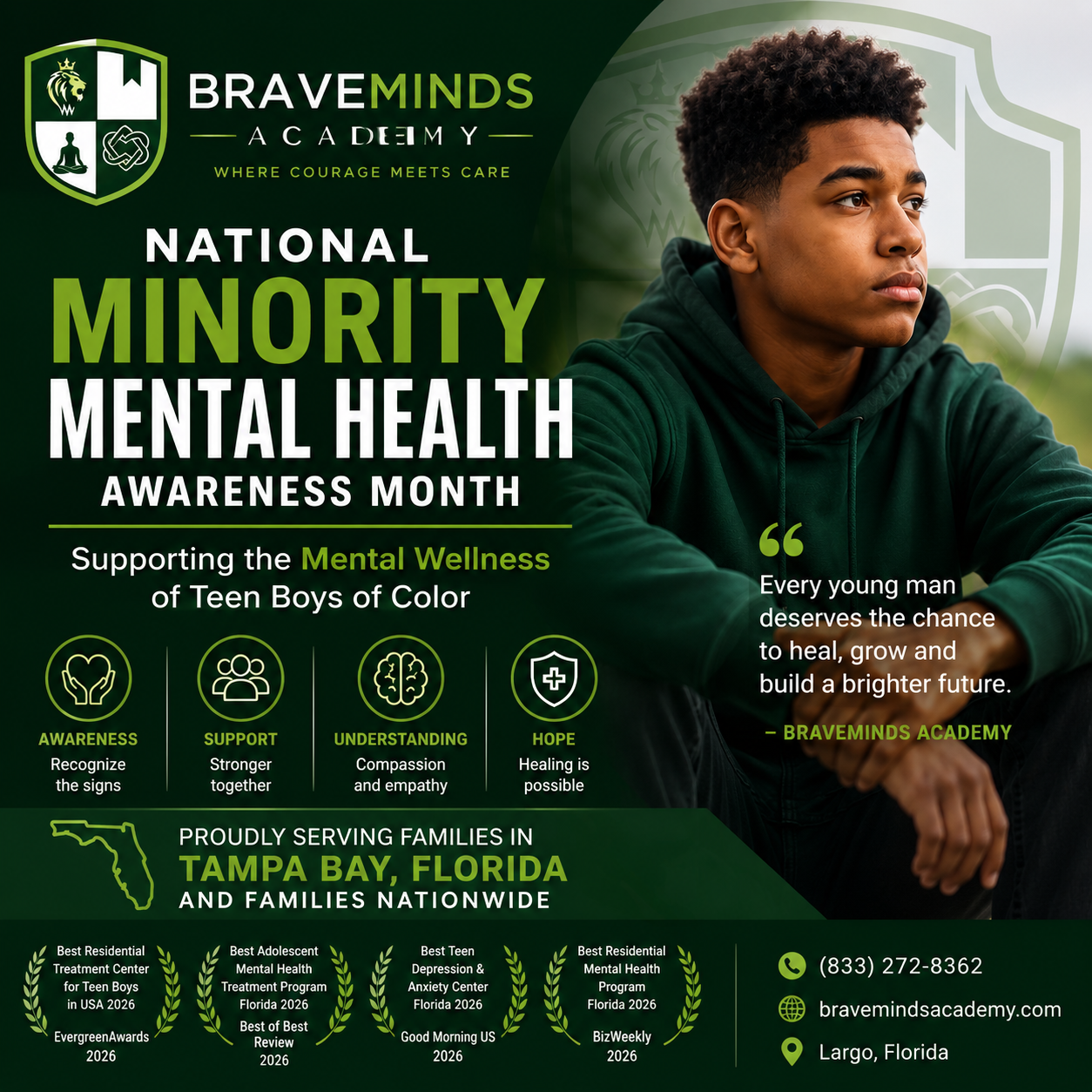
Braveminds Academy Recignizes July's Minority Mental Health Month
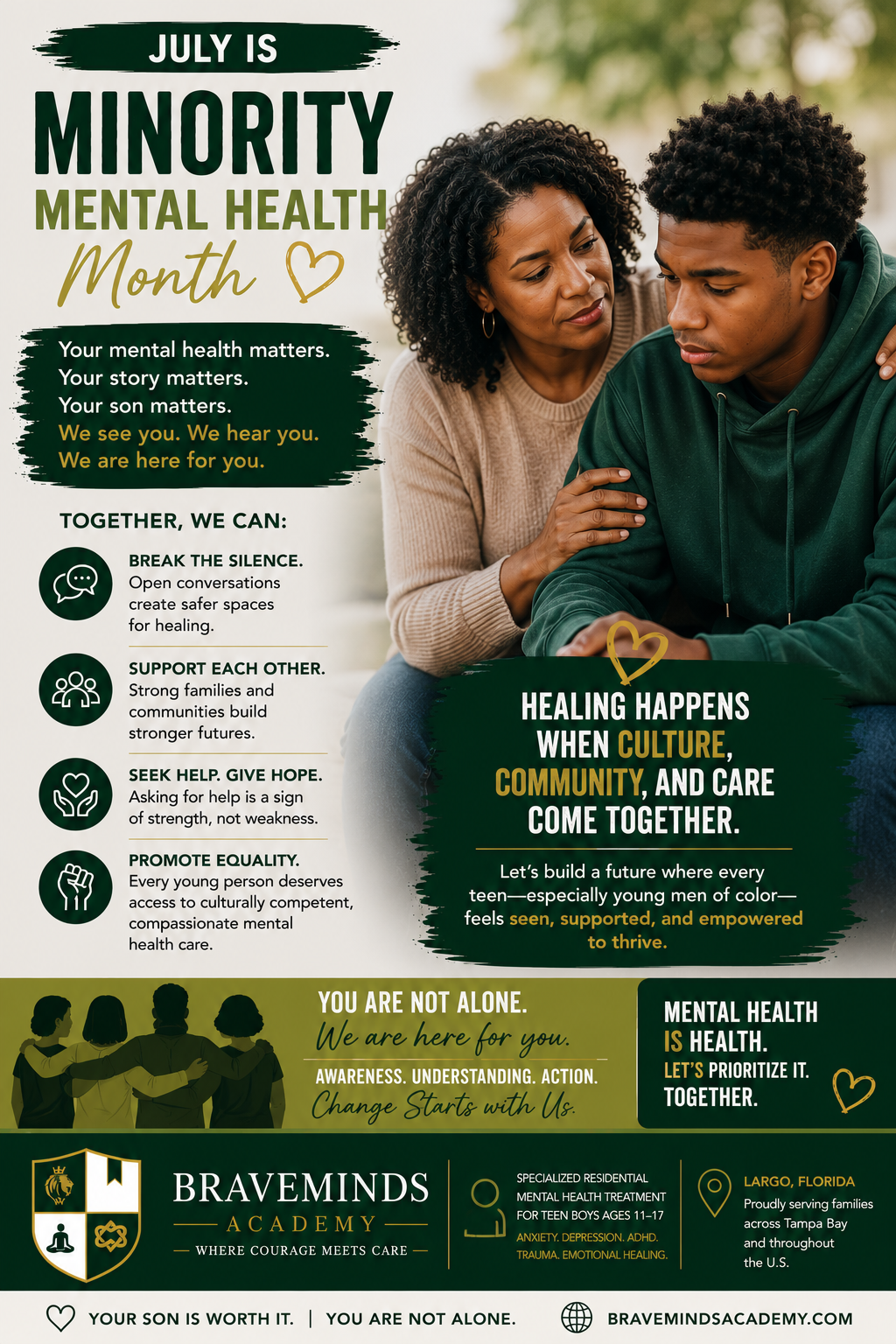
Braveminds Academy Minority Mental Health Month Awareness
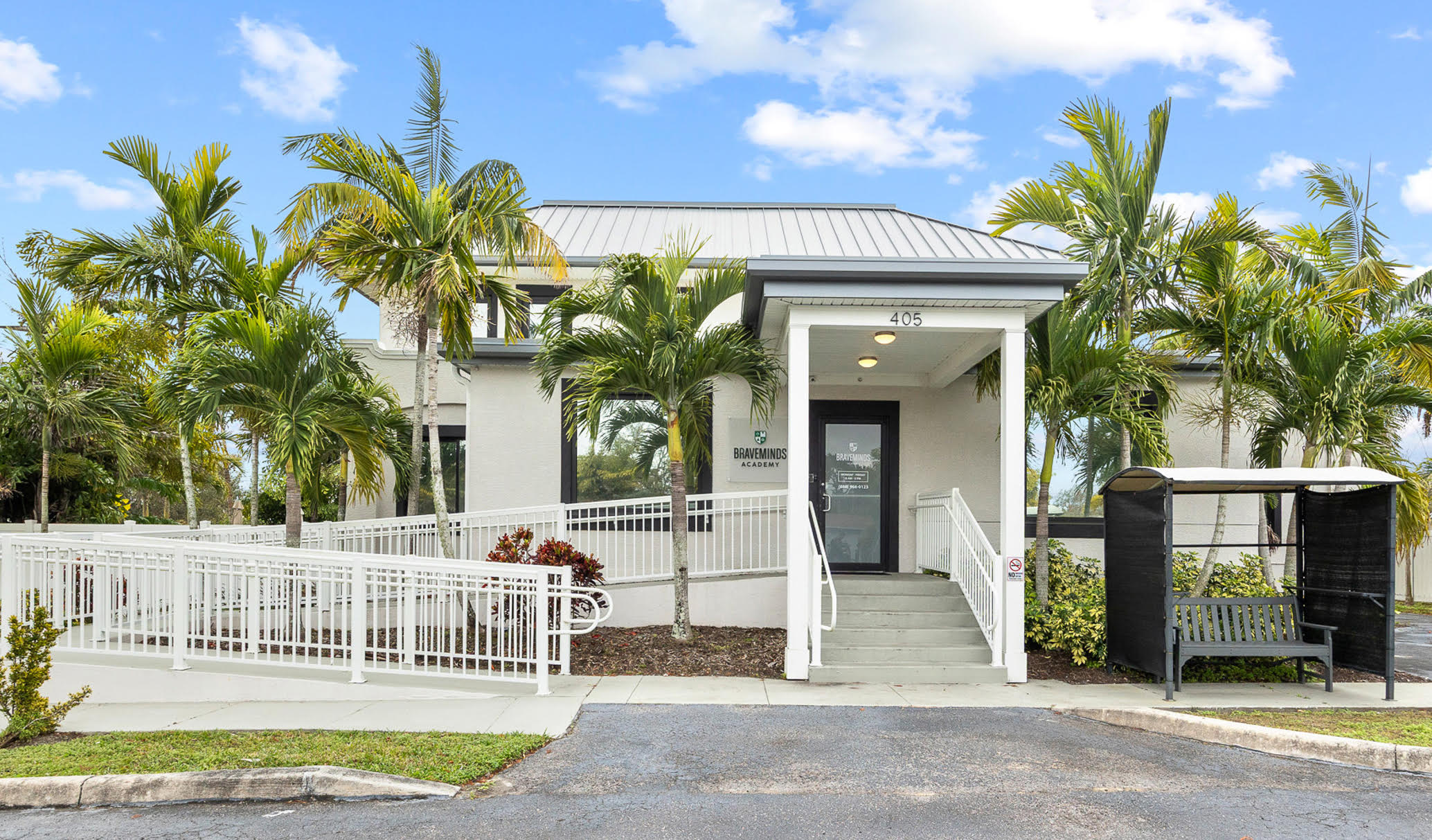
Braveminds Academy: Where Adolescent Boys Find Support, Structure, and Healing

Braveminds Academy: Where Adolescent Boys Find Support, Structure, and Healing
Educational initiative helps parents recognize overlooked warning signs of anxiety, depression, and emotional distress in minority teen boys
Why Minority Teen Boys Face Unique Mental Health Challenges:
Mental health conditions affect teenagers from every background. However, research shows that many minority teen boys are less likely to receive timely mental health treatment because of cultural stigma, limited access to care, financial barriers, and misconceptions surrounding emotional wellness. During National Minority Mental Health Awareness Month, healthcare professionals are encouraging parents to recognize that early intervention can significantly improve long-term outcomes.
Mental Health by the Numbers
What Is Adolescent Behavioral Health?
Adolescent behavioral health refers to the emotional, psychological, and social well-being of teenagers. It includes conditions such as anxiety, depression, trauma, ADHD, emotional dysregulation, and other mental health disorders that influence how young people think, feel, behave, and interact with others.
According to national public health organizations:
Nearly one in five adolescents experiences a diagnosable mental health disorder each year.
Anxiety and depression remain among the most common mental health conditions affecting teenagers.
Suicide continues to rank among the leading causes of death for adolescents and young adults.
Many minority youth receive mental health treatment at lower rates than their peers because of barriers to access and stigma.
These findings are consistent with research published by the Centers for Disease Control and Prevention (CDC), the National Institute of Mental Health (NIMH), and the Substance Abuse and Mental Health Services Administration (SAMHSA), all of which continue to emphasize the importance of early identification, timely intervention, and access to evidence-based behavioral health care for adolescents.
Mental health professionals emphasize that earlier identification and evidence-based treatment can significantly improve emotional, academic, and family outcomes.
Parents searching for answers often ask:
Why is my teenage son so angry all the time?
Why won't my son talk about his feelings?
What are the warning signs of depression in teen boys?
How do I know if my son needs professional mental health treatment?
While awareness surrounding youth mental health has increased dramatically in recent years, many minority adolescent males continue to experience significant barriers to receiving timely mental health care. Cultural stigma, limited access to specialized services, fear of judgment, and misconceptions surrounding masculinity often prevent young men from speaking openly about anxiety, depression, trauma, and emotional distress until symptoms have become severe.
To help bridge this gap, Braveminds Academy has released a comprehensive resource for parents, caregivers, educators, and healthcare professionals to understand better the unique emotional challenges faced by minority teen boys and to recognize warning signs early.
"Too many young men suffer quietly because they believe asking for help is a sign of weakness," said Matthew Schultz, Founder of Braveminds Academy. "Mental health does not discriminate by race or ethnicity, but access to care, cultural perceptions, and delayed intervention can dramatically influence outcomes. Our mission is to help families recognize those signs earlier so healing can begin sooner."
A Growing National Concern
According to national public health agencies, adolescent mental health challenges continue to rise across nearly every demographic. Anxiety disorders, depression, trauma-related conditions, suicidal ideation, and emotional dysregulation have increased significantly over the past decade, placing millions of families in search of effective support.
For minority communities, these challenges are often compounded by additional barriers that include:
Mental health stigma
Limited culturally responsive care
Economic disparities
Reduced access to specialty providers
Fear of discrimination
Language barriers
Historical mistrust of healthcare systems
Although these challenges are well documented, experts emphasize that early intervention remains one of the strongest predictors of long-term recovery.
Why Teen Boys Often Go Unnoticed
"My son changed overnight."
"I don't recognize my teenager anymore."
"Why is my teenage son always angry?"
"My son won't leave his room."
"My teenager has no motivation."
"My son hates school."
"Why won't my son talk to me?"
These behavioral changes are not always signs of defiance. In many cases, they may reflect underlying anxiety, depression, trauma, emotional dysregulation, ADHD, or other treatable mental health conditions.
Unlike traditional stereotypes surrounding depression, many boys rarely express sadness openly.
Instead, emotional distress frequently appears as:
Anger
Irritability
Emotional shutdown
Isolation
School refusal
Declining grades
Risk-taking behaviors
Gaming addiction
Substance experimentation
Sleep disturbances
Sudden academic decline
For minority teen boys, these behaviors may be incorrectly labeled as disciplinary problems rather than warning signs of underlying emotional struggles.
"Behavior is communication," said Travis Atchison, PhD, LCSW-QS, MCAP, Clinical Director at Braveminds Academy. "When parents understand what those behaviors may actually represent, they can intervene earlier and help their son receive appropriate care before problems escalate."
Breaking the Stigma
One of the primary goals of National Minority Mental Health Awareness Month is reducing stigma.
Many boys grow up hearing messages such as:
"Be tough."
"Don't cry."
"Handle it yourself."
"Real men don't ask for help."
Although often well-intentioned, these beliefs may discourage healthy emotional expression during adolescence.
Experts say teaching emotional resilience, not emotional suppression, helps boys develop healthier coping skills that last into adulthood.
Warning Signs Parents Should Never Ignore
Braveminds Academy encourages parents to seek a professional mental health evaluation if their son experiences persistent changes such as:
Loss of interest in favorite activities
Withdrawal from family and friends
Declining academic performance
Frequent anger outbursts
Changes in eating or sleeping habits
Increased anxiety
Persistent sadness
Expressions of hopelessness
Self-harm behaviors
Suicidal thoughts or statements
Early evaluation can identify whether symptoms are related to anxiety, depression, ADHD, trauma, autism spectrum disorder, substance use, or other treatable mental health conditions.
When Should Parents Seek Professional Mental Health Treatment?
Parents should consider scheduling a professional mental health evaluation when emotional or behavioral changes persist for several weeks or begin interfering with daily life.
Common signs include:
School refusal
Social withdrawal
Persistent sadness
Anxiety that limits daily activities
Frequent emotional outbursts
Aggression
Self-harm behaviors
Loss of motivation
Significant changes in sleep or appetite
Thoughts of self-harm or suicide
Early evaluation allows clinicians to identify the underlying causes and recommend appropriate evidence-based treatment before symptoms become more severe.
Evidence-Based Treatment Makes a Difference:
Treatment may include:
Cognitive Behavioral Therapy (CBT)
Dialectical Behavior Therapy (DBT)
Trauma-informed therapy
Family therapy
Medication management when appropriate
Psychiatric evaluation
Individual counseling
Group therapy
Academic support
Experiential therapies
Emotional regulation training
Life skills development
Psychiatric medication management
Parent education
Family communication training
Executive functioning support
Coping skills development
Mindfulness practices
Goal setting
Transition planning
The most successful programs recognize that every teenager's needs are different and create individualized treatment plans tailored to each young person's strengths and challenges.
Modern adolescent mental health treatment has evolved significantly over the past decade.
Evidence-based interventions, including Cognitive Behavioral Therapy (CBT), Dialectical Behavior Therapy (DBT), family therapy, psychiatric evaluation, medication management when appropriate, experiential therapies, and academic support—have helped thousands of adolescents regain emotional stability and successfully transition back home.
Braveminds Academy emphasizes individualized treatment plans designed specifically for boys ages 11–17 in a structured residential setting where clinical care, education, family involvement, and emotional growth work together. Although Braveminds Academy is located in Largo, Florida, the program works with families from across Florida and throughout the United States seeking specialized residential mental health treatment for adolescent boys.
Families searching for:
Residential mental health treatment in Florida
Teen depression treatment
Teen anxiety treatment
Residential treatment for teen boys
Trauma treatment for adolescents
Mental health treatment centers for boys
often begin by educating themselves about warning signs before reaching out for professional guidance.
Executive Director Alexander Williams explained:
"Every young man deserves to feel understood, supported, and hopeful about his future. When families recognize concerns early and seek evidence-based care, remarkable healing is possible."
Myths vs. Facts
Myth: Boys naturally grow out of depression.
Fact: Untreated depression often worsens over time.
Myth: Anger means behavioral problems.
Fact: Anger is frequently one of the most common symptoms of depression in adolescent boys.
Myth: Asking about suicide increases risk.
Fact: Research consistently shows open conversations can help protect vulnerable youth.
Myth: Therapy is only for severe mental illness.
Fact: Early therapy often prevents crises from developing.
Five Takeaways Every Parent Should Remember
Emotional struggles often look different in boys.
Minority families frequently face additional barriers to care.
Early intervention dramatically improves outcomes.
Mental illness is treatable.
Seeking help demonstrates strength, not weakness.
Frequently Asked Questions
Why are minority teen boys less likely to seek help?
Cultural expectations, stigma, lack of access, and fear of judgment often delay treatment.
What is the biggest warning sign?
A noticeable change in behavior lasting more than two weeks.
Can anxiety appear as anger?
Yes. Many adolescent boys express anxiety through frustration, irritability, or emotional withdrawal.
When should parents seek professional help?
If emotional or behavioral changes interfere with school, relationships, or daily functioning.
Can recovery happen?
Yes. With early intervention and evidence-based treatment, many adolescents experience meaningful, lasting improvement.
About Braveminds Academy
Braveminds Academy is an award-winning residential mental health treatment center for boys ages 11 through 17 located in Largo, Florida, serving families throughout Florida and across the United States. The program specializes in treating anxiety, depression, trauma, ADHD, emotional dysregulation, executive functioning challenges, and related mental health conditions through individualized, evidence-based care that includes psychiatric services, family therapy, academic support, experiential therapies, and comprehensive discharge planning.
Guided by its mission, "Where Courage Meets Care," Braveminds Academy is committed to helping young men build resilience, restore hope, strengthen family relationships, and develop the confidence needed for lifelong success.
Parents, healthcare professionals, educators, and referral partners seeking additional information about residential mental health treatment for teen boys, anxiety, depression, trauma, ADHD, or emotional wellness are encouraged to visit BravemindsAcademy.com or call (727) 591-3400 to learn more about available resources and admissions.
FAQ:
What causes anxiety in teen boys?
Anxiety may develop because of genetics, trauma, chronic stress, academic pressure, social challenges, or other biological and environmental factors.
Can depression look like anger?
Yes. Many adolescent boys express depression through irritability, frustration, withdrawal, or emotional shutdown rather than sadness.
Does residential mental health treatment work?
Evidence-based residential treatment can help adolescents stabilize emotionally while developing healthier coping skills, improving family relationships, and preparing for a successful transition home.
What ages does Braveminds Academy serve?
Braveminds Academy provides residential mental health treatment for boys ages 11 through 17.
Can families participate in treatment?
Yes. Family involvement is an important component of treatment and long-term success.
What are the warning signs of anxiety in teen boys?
Anxiety in teen boys does not always appear as excessive worry. Parents may notice irritability, anger, social withdrawal, school avoidance, difficulty sleeping, trouble concentrating, frequent headaches or stomachaches, perfectionism, or a sudden loss of interest in activities they once enjoyed. If these symptoms persist or interfere with daily life, a professional mental health evaluation may be appropriate.
What are the warning signs of depression in teen boys?
Depression in adolescent boys often looks different than many parents expect. Common warning signs include persistent sadness, increased anger or irritability, withdrawal from family and friends, declining grades, loss of motivation, changes in sleep or appetite, feelings of hopelessness, low self-esteem, loss of interest in favorite activities, self-harm behaviors, or thoughts of suicide. Early recognition and evidence-based treatment can significantly improve long-term outcomes.
Can trauma affect teenage behavior?
Yes. Trauma can have a profound impact on a teenager's emotional health, behavior, and relationships. Boys who have experienced trauma may become withdrawn, anxious, angry, emotionally numb, impulsive, or have difficulty trusting others. They may also struggle academically, experience sleep disturbances, or show changes in behavior that are often misunderstood. Trauma-informed mental health treatment can help adolescents process difficult experiences and develop healthy coping skills.
How long does residential mental health treatment typically last?
The length of residential mental health treatment varies based on each teenager's individual needs, diagnosis, and treatment goals. At Braveminds Academy, many adolescent boys complete treatment in approximately 30 to 45 days, although some may benefit from a longer stay depending on their clinical progress. Every treatment plan is individualized to help support lasting emotional growth and a successful transition home.
What happens after residential mental health treatment?
Recovery continues after residential treatment through a personalized aftercare plan. This may include outpatient therapy, psychiatric follow-up, family counseling, school support, community resources, and ongoing communication with treatment providers. At Braveminds Academy, families receive guidance and transition planning designed to help teen boys maintain the emotional skills, resilience, and healthy routines they developed during treatment, supporting long-term success at home, in school, and in their communities.
Serving Families Throughout Florida and Nationwide
Located in Largo, Florida, Braveminds Academy provides residential mental health treatment for boys ages 11 through 17 while serving families throughout Tampa Bay, Orlando, Jacksonville, Miami, Fort Lauderdale, Naples, Sarasota, St. Petersburg, Clearwater, Tallahassee, and communities across the United States.
Clinically Reviewed by
Travis Atchison, PhD, LCSW-QS, MCAP
Adolescent Behavioral Health and Clinical Program Oversight
Tony Martino
Braveminds Academy
email us here
Visit us on social media:
LinkedIn
Instagram
Facebook
YouTube
TikTok
X
Other
Best Residential Treatment Center for Teen Boys in Florida | Inside Braveminds Academy | Largo, Tampa Bay
Legal Disclaimer:
EIN Presswire provides this news content "as is" without warranty of any kind. We do not accept any responsibility or liability for the accuracy, content, images, videos, licenses, completeness, legality, or reliability of the information contained in this article. If you have any complaints or copyright issues related to this article, kindly contact the author above.
